Average Email Open Rates in 2025 (+16 Ways to Improve)

Updated on 10 Sep 2025
Table of Contents
- What average email open rates are you seeing in your industry in 2025?
- Factors influencing email open rates
- The effect of iOS 15 and privacy updates on open rates
- 16 Strategies to Improve Your Email Open Rates
- 1. Segment your audience strategically
- 2. Provide valuable content
- 3. Sharpen your subject lines
- 4. Write irresistible preheaders
- 5. Choose the right "from" name and address
- 6. Send at optimal times for your audience
- 7. Add your logo and branding consistently
- 8. Avoid the spam folder
- 9. Warm Up Your Email
- 10. Follow opt-in best practices
- 11. Set clear expectations upfront
- 12. Clean Your Email List Regularly
- 13. Use re-engagement campaigns for inactive contacts
- Choosing the right email marketing software can transform your marketing efforts
Most Popular
Email open rates are a key metric for email marketing success. Emails form a crucial part of your inbound strategy, driving conversions, engagement, and revenue. But without opens, even the most compelling content remains unseen.
This comprehensive guide reveals the average open rates by industry, proven strategies on how to increase your email open rates and transform your campaigns.
Beyond basic tactics like optimizing subject lines and send times, I’ll go over the most relevant metrics in today’s privacy-focused digital landscape. You’ll also gain insider tips to enhance long-term subscriber engagement.
Whether you’re addressing low open rates or optimizing already successful campaigns, these actionable strategies will help you cut through inbox noise and connect effectively with your target audience.
What average email open rates are you seeing in your industry in 2025?
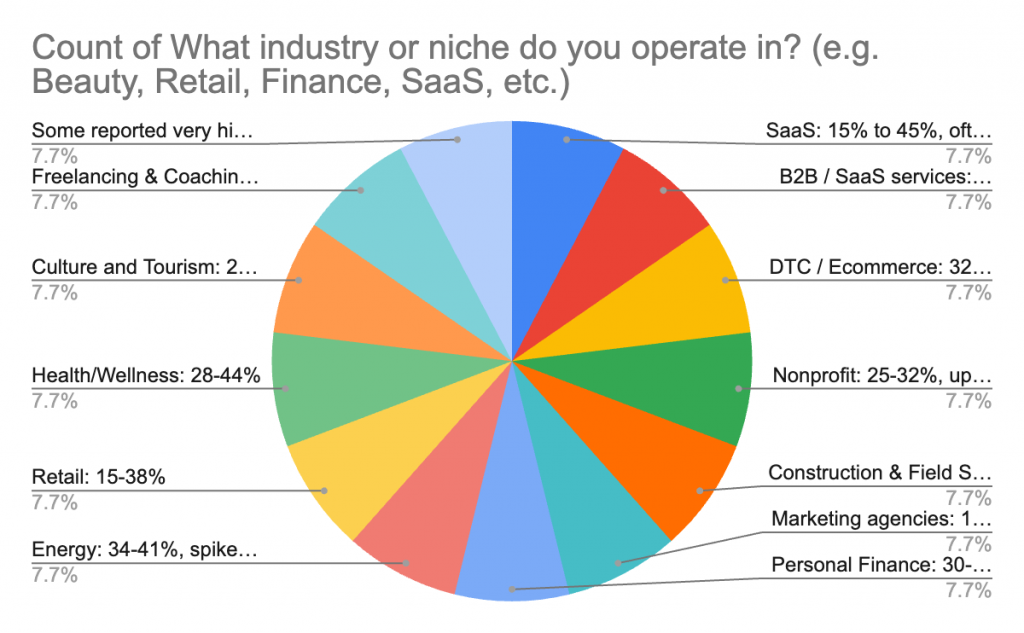
Open rates vary widely depending on industry and segmentation quality. According to the 50 email marketing experts we interviewed, email open rates typically range from:
- SaaS: 15% to 45%, often 20-30%
- B2B / SaaS services: 35-45%
- DTC / Ecommerce: 32%-42%
- Nonprofit: 25-32%, up to 40% with personalization
- Construction & Field Services: 20-40%
- Marketing agencies: 18-35%
- Personal Finance: 30-35%
- Energy: 34-41%, spikes past 50% based on events
- Retail: 15-38%
- Health/Wellness: 28-44%
- Culture and Tourism: 28%
- Freelancing & Coaching: ~40%
- Some reported very high (above 50-60%) due to strong segmentation and brand strength.
Factors influencing email open rates
- Location: Geographic differences can impact email engagement due to varying cultural norms and internet usage patterns.
- Industry: Different industries have unique challenges and opportunities in email marketing, affecting open rates.
- Business Type: Whether a business is B2B or B2C can significantly influence email open rates.
- Type of Email: The nature of the email—whether a newsletter, promotional, or transactional—can affect its open rate.
The effect of iOS 15 and privacy updates on open rates
Apple’s Mail Privacy Protection, launched in September 2021, has affected email open rate tracking by pre-loading emails and potentially causing false positives in open rate analytics. Other email providers have implemented similar privacy measures, further complicating tracking efforts.
Despite these challenges, email opens remain valuable when interpreted correctly. Understanding the context and segmenting audiences can help you continue to leverage open rates effectively in your strategies.
16 Strategies to Improve Your Email Open Rates
Achieving higher open rates requires a strategic approach, blending both creative content and data-driven insights. Here are 16 effective strategies to help you capture your audience’s attention and increase engagement.
1. Segment your audience strategically
Blanket emails often fall flat because they fail to target the specific needs and interests of diverse audience groups. By segmenting your audience, you can tailor content to resonate more deeply with each group. Consider these segmentation criteria:
- Demographic: Age, gender, and location can influence preferences.
- Formographic: Company size, industry, and job role for B2B emails.
- Psychographic: Interests, values, and lifestyle choices.
- Behavioral: Past purchases, browsing history, and engagement levels.
Personalized email marketing software like Insider simplifies segmentation, allowing you to use these criteria effectively.
Pro Tip: Regularly update your segments as your audience evolves to maintain relevance.
2. Provide valuable content
Creating genuinely valuable content plays a vital role in increasing open rates. Personalization and relevance stand at the forefront of this strategy. In fact, 68% of marketers have observed that dynamic content personalization enhances performance. Additionally, 80% have noted that employing personalization tactics leads to improved results (Litmus, 2024).
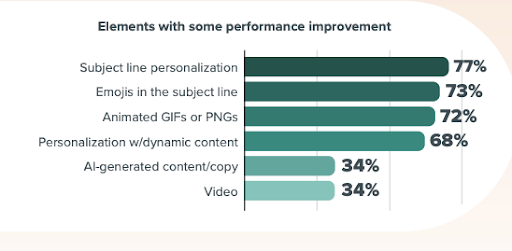
Source: Litmus State of Email Trends Report, 2024
Consider these strategies to improve email content:
- Personalization: Use the recipient’s name and tailor recommendations based on past interactions.
- Relevance: Align content with current trends or seasonal interests. Go a step further by finding out where they are in the buyer’s journey and dynamically serve content that is most relevant to them at that stage.
- Problem-Solving: Address common pain points or questions within your industry and position yourself as the solution to their problems.
This is not a set-it-and-forget-it exercise. Use analytics to continuously refine your content strategy based on engagement metrics.
3. Sharpen your subject lines
Crafting compelling subject lines is vital, as 47% of recipients open emails based on the subject line alone. Here are some tactics with examples that you can use:
- Urgency: “Last Chance: 50% Off Ends Tonight!”
- Curiosity: “Do You Know the Secret to Better Sleep?”
- Personalization: “Hey [Name], Your Exclusive Offer Awaits!”
- Benefit-Focused: “Boost Your Productivity with These Tips”
- Question-Based: “Ready to Transform Your Workspace?”
Maintain an optimal character count (30-50 characters) and avoid spam trigger words like “Free” or “Buy Now.” Incorporate emojis strategically to boost open rates by up to 56% (Campaign Monitor, 2024).
A/B testing different subject lines with email tracking software can help determine what resonates best with your audience.
4. Write irresistible preheaders
Preheader text appears alongside the email subject line in the inbox and should complement it, not repeat it. Effective preheader formulas include:
- Teaser: “Uncover the secrets inside…”
- Question: “Want to learn more?”
- Value Proposition: “Save time with these tips.”
- Call to Action (CTA): “Join us for an exclusive webinar.”
Character limits for preheaders typically range from 80-100 characters, so make every word count.
Another important thing to note: If you don’t set a preheader in your email’s configuration, many email services may show the initial line of your message instead. This might lead to confusion or fail to provide any benefit to your readers. Maximize your open rates by carefully crafting this additional line of text.
Pro Tip: Ensure preheaders are visible on both desktop and mobile devices.
5. Choose the right “from” name and address
This might seem obvious, but you’ll be surprised how many marketers get this wrong! Sender names significantly impact open rates.
Personal names can create a sense of familiarity, while company names convey professionalism. Use personal names for relationship-building emails and company names for official communications. Consistency in the “From” name builds trust, while a clear “reply-to” address invites engagement.
(Source: SuperOffice, 2023)
Pro Tip: Test variations using deliverability software to see which sender name resonates best with your email recipients.
6. Send at optimal times for your audience
The notion of “universal best times” for sending emails is a myth that often leads to misguided strategies. While general guidelines suggest that sending emails between Tuesday and Thursday, from 10 am to 2 pm, can be effective, these are merely starting points. The true optimal time of day depends heavily on your specific audience’s habits and preferences.
To uncover the best times for your audience, conducting audience-specific testing is crucial. This involves experimenting with different send times and analyzing engagement metrics to identify patterns that resonate with your recipients. Email automation software like Insider can help in optimizing send times by considering time zone differences, ensuring your emails land in inboxes at the most opportune moments.
Additionally, the frequency of your emails can significantly impact their effectiveness. Sending too frequently may lead to audience fatigue and unsubscribes, but infrequent emails might cause your audience to forget you. Striking the right balance requires careful monitoring of engagement and feedback, allowing you to adjust your strategy to maintain a healthy and responsive subscriber base.
7. Add your logo and branding consistently
Visual recognition plays a crucial role in establishing and maintaining brand identity. By consistently incorporating your logo and branding across all email communications, you enhance brand recall and foster trust among recipients. Consistency in email templates ensures that your audience can immediately recognize your brand, whether they are viewing the email on a desktop or a mobile device.
When it comes to mobile optimization, ensuring that your logo is clearly visible and scales appropriately is essential. This may require creating multiple versions of your logo to accommodate different screen sizes. Additionally, file size considerations are important to prevent long loading times, which can deter engagement. A good rule of thumb is to keep your logo file size under 100KB to ensure quick loading without compromising quality.
Brand Indicators for Message Identification (BIMI) is a standard that allows your logo to be displayed next to your emails in the inbox, further enhancing brand visibility. Also consider using a branded sender photo, which can add a personal touch and reinforce brand identity.
By strategically implementing these elements, you can create a cohesive and professional brand image in all your email communications.
8. Avoid the spam folder
Emails that make it to the inbox can see open rates increase by up to 21% (Alore, 2024). Emails that don’t, end up in spam and are automatically deleted. To avoid emails from going to spam, it’s crucial to steer clear of common spam trigger words such as “free,” “guaranteed,” and “limited time offer.”
Implementing technical authentication methods like SPF, DKIM, and DMARC can also help verify the legitimacy of your emails, reducing the risk of them being caught by spam filters. Tools like MailGenius and GlockApps can be used to test your emails for spam triggers and authentication issues before sending.
Maintaining a balanced content-to-image ratio is another key factor. The recommended guideline is to keep at least 60% of your email as text, with images not exceeding 40%. This helps ensure that your emails remain informative while minimizing the risk of being flagged as spam. By following these practices, you can improve your email deliverability and open rates.
9. Warm Up Your Email
When you start using a new domain or IP address for email marketing, it’s crucial to go through a process called email warm-up. This gradual approach helps you build trust with Email Service Providers (ESPs) and improves your sender reputation, ultimately increasing the chances of your emails landing in recipients’ inboxes rather than spam folders.
New domains and IPs are like strangers in the email world. ESPs are cautious about unfamiliar senders to protect their users from potential spam. By slowly increasing your email volume over time, you demonstrate that you’re a legitimate sender who follows email best practices.
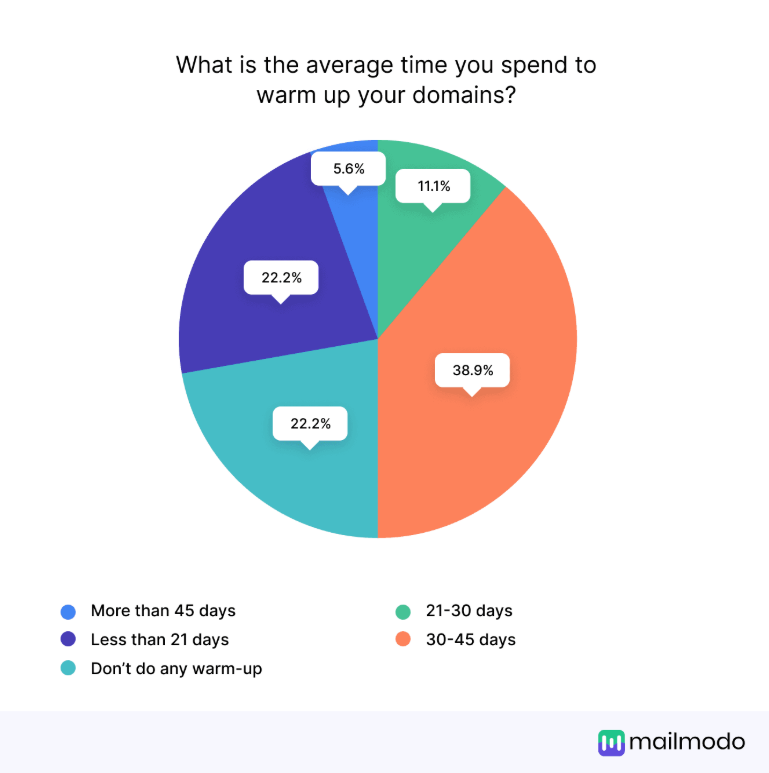
Most organizations spend a month warming up email before launching campaigns. Source: Mailmodo, State of Email 2025
Start by sending a small number of emails (5-10 per day) and gradually increase the volume by 10-15% daily. Ensure your initial recipients are engaged and interact with your emails. Use varied content and sending patterns to mimic natural email behavior.
As you progress, ESPs will recognize your domain as trustworthy, improving your overall deliverability. This process typically takes 30-45 days, depending on your sending volume and engagement rates. Consistency is key. Maintain a steady sending schedule and monitor your reputation metrics to ensure a successful warm-up.
10. Follow opt-in best practices
Single opt-in and double opt-in methods each have their advantages. Single opt-in allows for faster list growth but may lead to lower-quality subscribers and potential deliverability issues. Double opt-in ensures higher-quality subscribers and better deliverability but results in slower subscriber list growth. Choose based on your priorities: rapid growth or engagement quality.
To optimize signup forms, keep them simple and mobile-friendly. Use clear, action-oriented language and highlight the value proposition. Place forms strategically on your website, such as in the header, footer, or as exit-intent popups.
Ensure compliance with regulations like GDPR and CAN-SPAM by including necessary disclosures, obtaining explicit consent, and providing easy unsubscribe options. Keep records of user consent for audit purposes.
For lead magnets, offer valuable, relevant content that addresses your audience’s pain points. Examples include ebooks, checklists, or exclusive discounts. Ensure the lead magnet aligns with your overall marketing strategy and delivers on its promised value to maintain subscriber trust.
Pro Tip: Test different opt-in methods to see which yields the best engagement.
11. Set clear expectations upfront
Transparency is crucial in email marketing, as it builds trust and improves engagement with your subscribers. By setting clear expectations from the start, you create a foundation for a positive relationship with your audience. For example, include a note on your sign-up form or confirmation message that outlines what subscribers can expect from your emails.
Good expectation setting includes being specific about the frequency of your emails and the types of content you’ll send. Whether you plan to send weekly newsletters, monthly product updates, or occasional promotional offers, communicate this upfront. This allows subscribers to make an informed decision about joining your list.
Address frequency promises by stating how often you’ll email subscribers and stick to that schedule. Clearly outline the content types they’ll receive, such as educational articles, industry news, or exclusive offers.
Set up a preference center that allows subscribers to choose their desired email frequency and content types. This empowers them to customize their experience and increases the likelihood of engagement.
Lastly, include clear and easily accessible unsubscribe options in every email. This best practice not only complies with regulations but also demonstrates respect for your subscribers’ choices.
Pro Tip: Use welcome emails to reinforce expectations and build rapport.
I
In this welcome email, CakeHR sets expectations by clearly stating what the audience will see in their inbox and how often.
12. Clean Your Email List Regularly
Maintaining a clean email list is crucial for ensuring high deliverability rates, enhancing sender reputation and improving your placement in the inbox. Here’s how you can build a clean email list:
Cleanup Criteria:
- Bounce Rates: Remove email addresses that consistently bounce back.
- Engagement Levels: Identify and remove subscribers who haven’t interacted with your emails over a specific period.
- Time Since Last Open: Consider removing contacts who haven’t opened an email in six months to a year.
Cleanup Frequency:
- Conduct a thorough list cleaning every 3-6 months.
- Implement ongoing monitoring to catch issues as they arise.
Quality vs. Quantity Mindset:
- Focus on maintaining a list of active and engaged subscribers.
- A smaller, engaged list is more valuable than a large, uninterested audience.
Use automation tools to streamline the cleaning process. Tools can automatically flag inactive users and manage bounce handling. By regularly cleaning your email list, you can ensure that your email marketing strategy remains effective and efficient.
13. Use re-engagement campaigns for inactive contacts
Inactive subscribers are those who haven’t opened or engaged with your emails for six months or more. To win them back, a well-structured re-engagement campaign can be pivotal. Start by segmenting these inactive contacts and crafting a series of targeted emails aimed at rekindling their interest. The campaign could include an initial email reminding them of the value they once found in your content followed up by a sequence of personalized messages offering special incentives or updates on new offerings.
Re-engagement campaigns should include:
- Personalized Subject Lines: “We Miss You, [Name]”
- Incentives: “Exclusive Discount Just for You”
- Surveys: “Help Us Improve with Your Feedback”
- Content Previews: “See What’s New in Our Latest Issue”
- Urgency: “Last Chance to Stay Connected”
It’s crucial to monitor engagement levels throughout the campaign. If contacts remain unresponsive after multiple attempts, consider removing them from your list to maintain a healthy sender reputation.
Pro Tip: Make it easy for them to update their preferences or opt back in. Use A/B testing to refine re-engagement strategies.
Choosing the right email marketing software can transform your marketing efforts
Finding the best email marketing software can make or break a business.
A good platform serves as the backbone of your marketing efforts, streamlining campaigns, enhancing audience targeting, and providing invaluable insights through analytics. However, the best platform goes a step further—it should enable you to optimize efficiency, refine strategies, leverage AI power and machine learning, and ultimately amplify the impact of your marketing initiatives across multiple channels.
Book a demo to discover how world-leading brands like NA-KD, Slazenger, MAC Cosmetics, and more, are using Insider to reach their email recipients with engaging, relevant content.