10 Best Enterprise Email Segmentation Tools for 2025

Updated on 9 Sep 2025
Table of Contents
Most Popular
Basic email segmentation is like drawing a map with a blunt pencil.
You can outline the territory, but you’ll miss the fine details that turn a message into a moment.
Splitting your list into smaller groups with shared characteristics is the backbone of personalization. It builds trust. It keeps your messaging relevant. But in the enterprise world, relevance isn’t enough.
You need real-time behavioral triggers that respond in seconds, dynamic lists that update as customer profiles shift, predictive analytics that forecast next moves, and cross-channel orchestration that makes every touchpoint feel intentional.
They’re the levers that move millions in the pipeline without burning out your marketing team. However, finding the right email segmentation platform is a major challenge for most enterprises.
There is so much that goes behind making this decision.
That’s why this guide tackles the biggest challenges your marketing teams face when evaluating segmentation tools and shares 10 email segmentation platforms that can handle the complexity and stakes.
How to pick the right email segmentation tool for enterprises?
Selecting an email segmentation tool for an enterprise is about building a foundation that can handle the velocity, volume, and complexity of your customer data for years to come.
The wrong choice will have you wrestling with data silos, broken integrations, and campaigns that underperform because your audience definitions are stale.
The right choice will quietly power personalization at scale, feeding every channel with accurate, real-time insights. The best place to start is with an enterprise evaluation framework:
Data management. Look at how each platform handles data at scale, whether it can process millions of records in near real time without lag, and how it integrates into your existing CRM, CDP, analytics, and eCommerce stack.
Compliance is non-negotiable. Your tool needs to align with GDPR, CCPA, and your own internal governance rules from day one.
Map out implementation complexity before signing anything. Some platforms promise limitless flexibility but require a dedicated engineering team to get off the ground. Consider how quickly you can launch your first dynamic segment, whether marketing can manage the tool independently, and if it streamlines your workflows or adds new bottlenecks.
Costs go beyond license fees. A true total cost of ownership model factors in integration work, onboarding and training, data storage, and the ongoing time required to maintain audience rules. The cheapest platform on paper may be the most expensive in man-hours.
Support quality is as critical as the tool itself. At the enterprise level, you need more than a help doc—you need a dedicated success manager, round-the-clock technical coverage with strict SLAs, and access to specialists who can advise on best practices for segmentation and personalization.
The 10 best email segmentation tools at a glance
Keeping the above evaluation framework in mind, we have picked 10 email segmentation platforms for your enterprise:
- Insider
- Klaviyo
- Braze
- Iterable
- HubSpot
- Mailchimp
- Customer.io
- ActiveCampaign
- Omnisend
- Brevo
| Tool | Best for | Key features | Pricing |
| Insider | AI-powered predictive segmentation with real-time updatesRobust enterprise supportFlexible data integration and modular architectureStrong behavior-triggered automation | 120+ segmentation attributes, including purchase intent and churn predictionOmnichannel campaign orchestrationReal-time segmentation based on user interactions | Pricing available on request; tailored for enterprise needs |
| Klaviyo | Easy integration with top eCommerce platformsDynamic segments auto-updating in real timeStrong personalization and analyticsLarge active user community | Predictive analytics segments for purchase and churn riskDrag-and-drop email editorA/B testing and campaign comparison analyticsFlexible scheduling and AI-optimized send times | Free plan up to 250 contacts and 500 emails/monthPaid plans start at $20/month for up to 500 subscribers |
| Braze | Industry-leading mobile engagement capabilitiesHighly customizable, powerful Canvas Flow journey builderReal-time, scalable data processingDeep AI and automation features for personalized segmentationStrong enterprise-grade integrations | Dynamic, real-time audience segmentationMulti-channel journey orchestration via Canvas FlowAdvanced AI with machine learning for personalizationDeep integrations with enterprise data platformsHigh-volume message orchestration | Custom enterprise pricing starting commonly between $60,000-$200,000+ annually |
| Iterable | Intuitive visual campaign builder with AI assistanceFlexible, adaptable data model for segmentationStrong multi-channel orchestrationTransparent AI explanations build trustMore accessible pricing and faster onboarding | Studio visual workflow builderAI-powered optimization and predictive segmentationExtensive integrations for mid-market and enterpriseCross-channel messaging orchestrationDynamic list and audience segmentation | Pricing starts from $500-$1,000/month; median enterprise contracts ~$30,000/year |
| HubSpot | Integrated all-in-one marketing and CRM platformUser-friendly with easy list segmentation and automationGood reporting and compliance toolsStrong support and community resourcesTransparent pricing and scalable plans | Dynamic audience segmentation linked to CRM dataMarketing automation workflows and drip campaignsAnalytics, reporting, and A/B testingLanding pages, forms, and subscriber managementCompliance tools (GDPR, CAN-SPAM) | Starts at $800/month (Marketing Hub Professional); Enterprise pricing available on quote |
| Mailchimp | Easy onboarding and useBroad integration supportCombined marketing with basic CRMAffordable entry tier | Basic segmentationMulti-channel marketing toolsReporting and analytics | Free plan availablePaid plans start ~$13/mo,Premium over $350/mo for advanced features |
| Customer.io | Unlimited complex segmentationReal-time event trackingOmnichannel messaging supportStrong API and customization | Advanced segmentation and nested dataOmnichannel campaigns (email, SMS, push, app)API-first design | Standard plans start ~$150/mo, higher for enterpriseCustom pricing based on usage |
| Active Campaign | Built-in CRM with sales automationAI-driven automation and predictive sendingMulti-brand supportStrong automation builder | Visual automation builderCRM integrationPredictive sendingAdvanced audience segmentation | Plans start $29/mo (Lite)Professional $129/moEnterprise custom pricing, approx $200+ /mo |
| Omnisend | Powerful eCommerce-tailored segmentation with real-time updatesComprehensive multi-channel marketing supportStrong integration network and lifecycle analyticsRobust enterprise-level support and guidance | Supports multiple segmentation types: demographic, behavioral, transactional, lifecycle, and engagement-basedReal-time automatic updates of segments to keep targeting precise and currentPre-built segmentation templates and customizable segment builder with multiple filters and nested conditionsCustomer Lifecycle Map helps visualize and prioritize customers by journey stageIntegrations with 80+ eCommerce platforms, CRMs, and analytics toolsMulti-channel campaign management including email, SMS, and push notifications.Tags and audience sync features for enhanced targeting and PPC optimization | Starts with free tier (limited features) Paid plans begin around $59/month; enterprise plans start ~ $400/month with dedicated support Pricing scales based on contact list size and features, with SMS and push notifications billed separately in some cases |
| Brevo | Competitive pricing suitable for cost-conscious enterprisesSupports multi-channel campaigns: email, SMS, WhatsAppVisual email journey builder with multiple triggers and conditionsEmail sending on all plans, including transactional emailsGood basic segmentation across all plans | Drag-and-drop email and automation journey builderBasic segmentation by behavior, purchase history, and engagementMulti-channel capabilities with email, SMS, and WhatsAppTransactional email support on all plans.Integration with essential marketing, CRM, and eCommerce platforms | Free tier available with limited emails per day Paid plans start at approximately $25/month for Lite Enterprise pricing is customized based on volume and feature needs |
1. Insider
Insider empowers enterprise brands with the depth of personalization to make customer interactions feel relevant and results-driven.

The platform doesn’t stop at unified messaging and intelligent triggers; it personalizes marketing for websites, apps, and channels, including WhatsApp, push notifications, SMS, email, and more. Let’s take a look at Insider’s features:
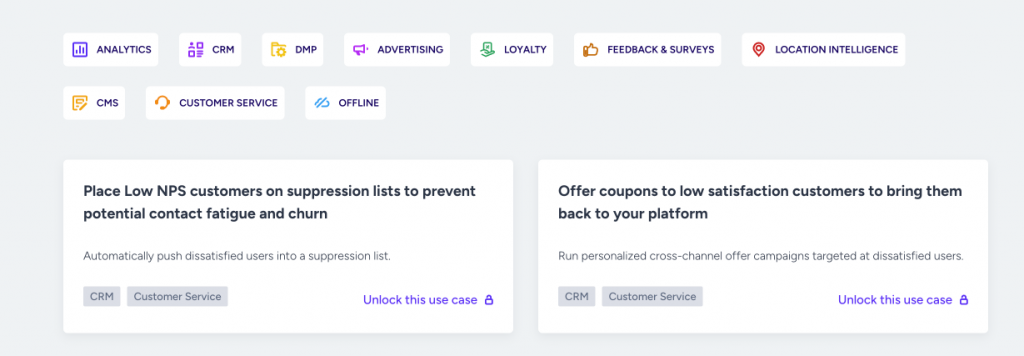
Connect customer data easily with “Actionable CDP”
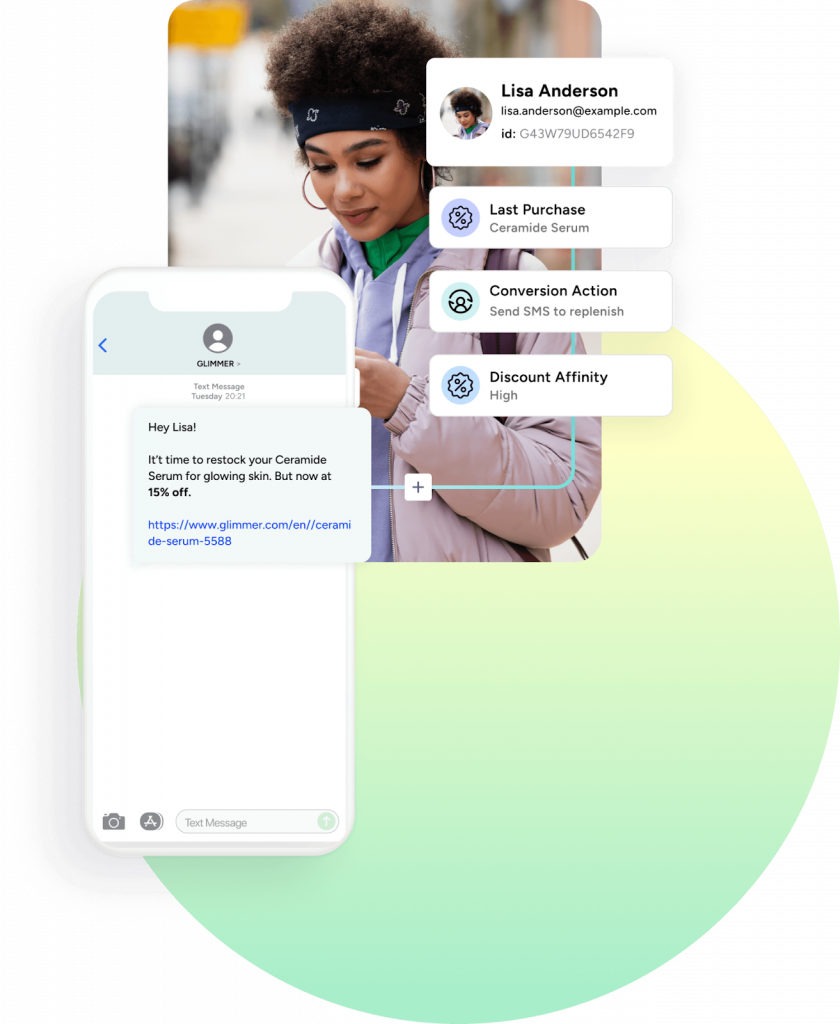
Our actionable CDP brings all your data into one place with no complex data stitching. All you need to do is choose the data sources you want to connect to Insider’s CDP, and the platform will give you a unified view of your customer, all the while showing you proven ways to turn that data into action right away:
What you get:
Profiles for both anonymous and known users, created automatically
Real-time behavioral data from the site, app, email, SMS, WhatsApp, and more, such as where customers clicked, which product categories they browsed, etc.
Client testimonial: G2 Review
“Before we began using Insider’s tools, our website and app had low engagement, and giving each visitor a personalized experience was a distant dream. We needed help determining what was going wrong. Using the Architect’s dynamic traffic allocation, we can automatically assign traffic based on channel engagement and performance. Now, we can reach our users through channels like Web push, WhatsApp, SMS, and email at the right moment in their buying journey. This change has greatly improved our growth in subscribers and increased our sales, and we don’t think there’s another platform out there that could have done it as smoothly as Insider did.”
Create and automate personalized customer journeys with “Architect”
Insider’s Architect lets you build, personalize, and automate multi-step marketing journeys across channels using a simple drag-and-drop editor.
You can:
- Trigger campaigns based on user actions like cart abandonment, restocks, or price drops. Define segments using pre-built audiences or Insider’s AI-based intent signals.
- Customize timing, messaging, and channels for each journey and track performance with built-in analytics.
- Speed up campaign creation with a library of ready-to-use journey templates. Insider’s AI also optimizes campaigns with:
- Next-best channel predictions
- Send-time optimization
- Auto-selection of A/B test winners
Personalize relevant channels in real time
Insider’s AI-powered personalization delivers real-time web, app, and content personalization to create tailored user experiences across channels.
What you get:
- Smart Recommender with out-of-the-box strategies: “Bought Together,” “Trending Now,” “Recently Viewed”
- Personalized content blocks for banners, product listings, and category pages
- InStory: Swipeable mobile stories tailored to behavior and interest
- Use-case: How Samsung experienced a 24% CVR boost with cart recovery web push notifications
Challenge: For the Galaxy Note launch, Samsung aimed to turn hype into conversions by driving traffic to its website and maximizing engagement.
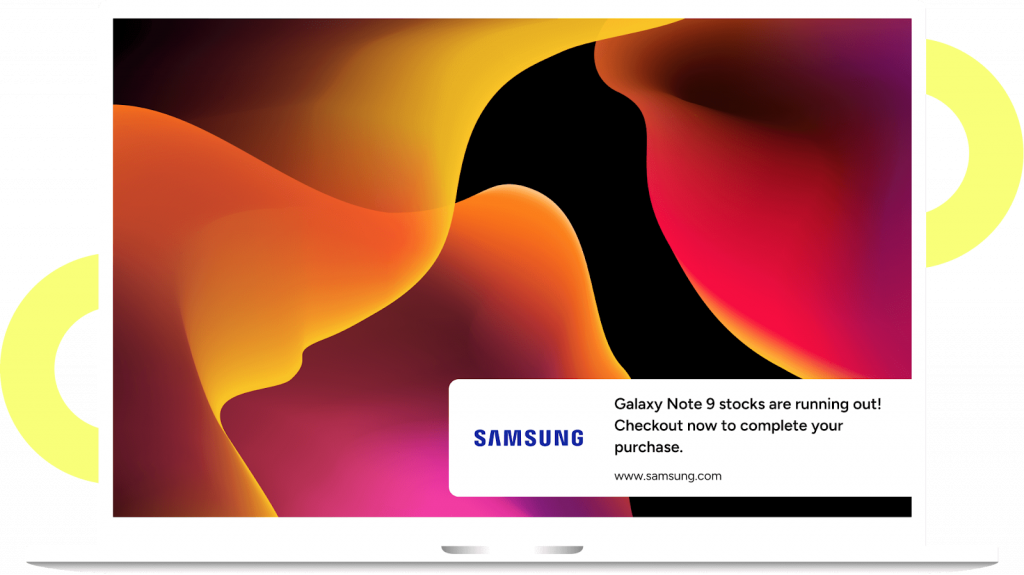
Solution: With Insider’s omnichannel journey builder (Architect), Samsung targeted users interested in competitor devices, guiding them to a dedicated landing page. Those who showed interest or abandoned their cart received personalized Web Push Notifications, leading to a 24% increase in conversion rates.
Work smarter with built-in intelligence: Sirius AI
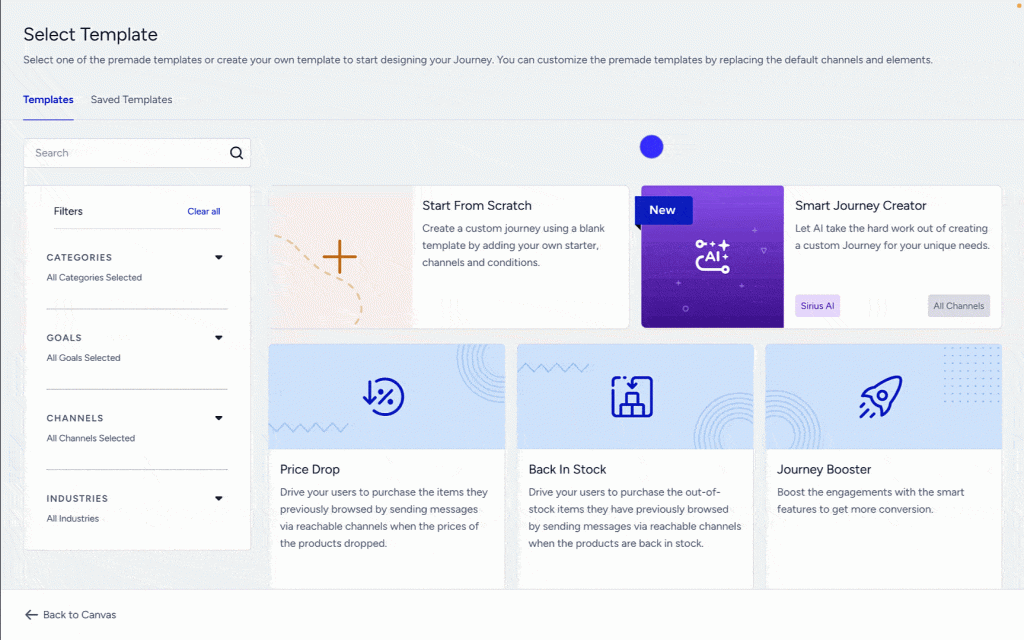
Put your personalization efforts on autopilot with Sirius AI, which powers predictions, segmentation, and optimization.
What you get:
- Instantly build AI-powered audiences (high-intent, churn risk, price-sensitive, etc.)
- Predict the next-best channel for each user
- Optimize send times for peak attention
- Auto-select A/B test winners to maximize impact
- Achieve up to 60% higher efficiency while delivering smarter, faster, and more personalized customer experiences.
2. Klaviyo
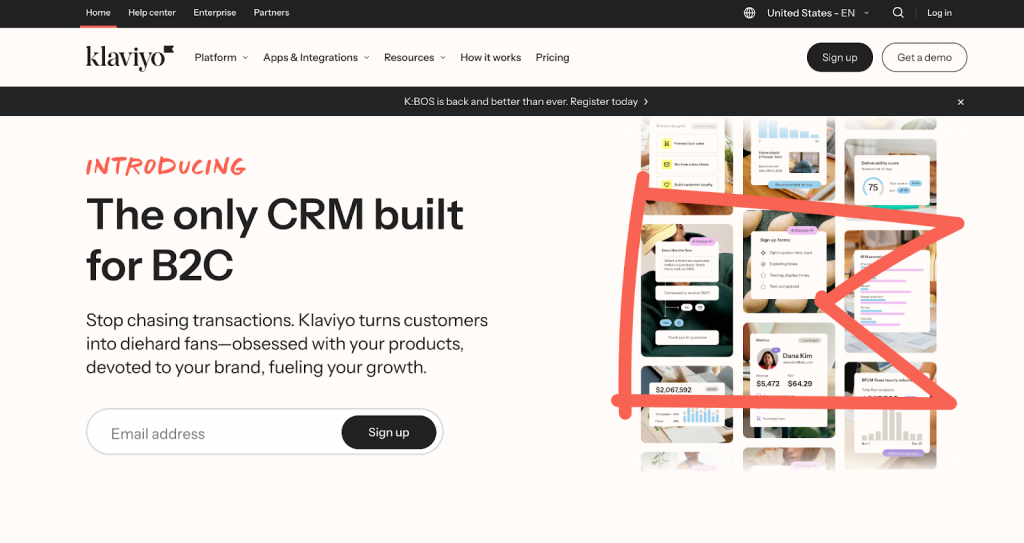
Klaviyo excels in dynamic, real-time segment updates and predictive analytics, particularly for eCommerce enterprises. Its platform can handle complex segmentation rules and continuous data growth, but may face pricing scalability concerns with large subscriber bases.
Generally positive, but some report longer wait times; support includes onboarding guides and an active community forum.
It also offers strong native integrations with many eCommerce platforms (e.g., Shopify, WooCommerce), extensive APIs for enterprise systems, and good support for custom data sources.
Klaviyo is highly rated for ease of use, segmentation sophistication, and resulting campaign ROI, with caveats about cost for very large enterprises.
3. Braze
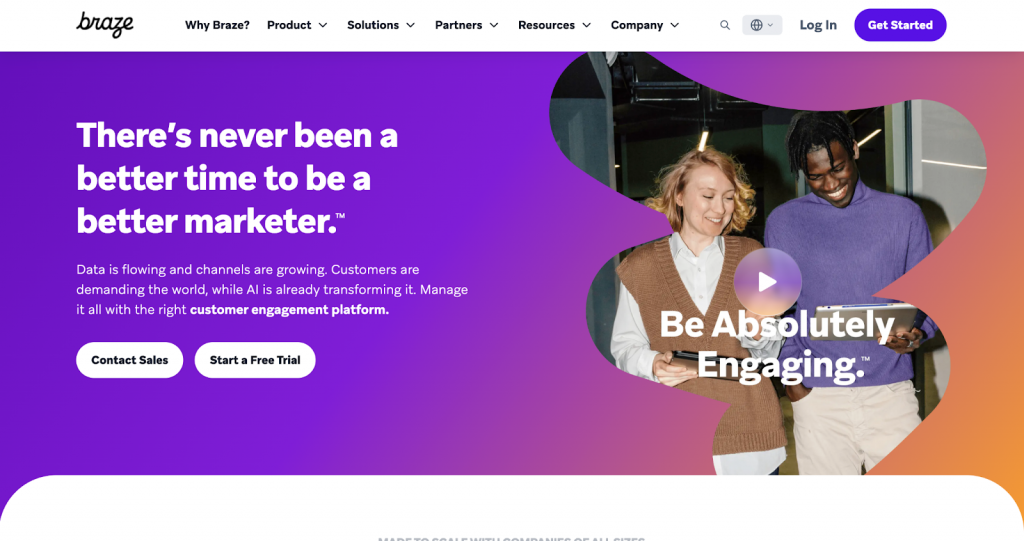
Braze is widely recognized as a leading enterprise powerhouse in customer engagement and email segmentation. It excels at orchestrating billions of messages globally with deep mobile-first expertise and real-time data processing. Major brands like Disney and HBO rely on Braze’s capability to handle complex, multi-channel customer journeys.
- Scalability & limitations: Braze scales effectively to very high message volumes and complex journey orchestration, but requires substantial technical resources and planning. Its sophisticated Canvas Flow journey builder can handle extreme customization but presents a steep learning curve and often necessitates dedicated teams.
- Customer feedback: Enterprise users appreciate Braze’s power and flexibility but note the high cost of ownership and implementation complexity. Some cite the steep onboarding and required technical skills as drawbacks.
- Support quality: Braze’s support is tailored for large, complex use cases with dedicated account management, but can feel less accessible for smaller or less technically mature teams.
- Integration ecosystem: Braze boasts an extensive, deep integration ecosystem, including advanced bi-directional connections with Salesforce, Snowflake, Adobe, and major data warehouses.
- Enterprise fit: Braze addresses real-world complexity with dynamic segmentation that updates continuously and robust AI-powered journey optimization (Sage AI).
- Scale-specific recommendations: It’s ideal for global enterprises needing high customization and mobile-centric marketing, but less suited to smaller teams due to resource demands.
- Total cost of ownership: Braze pricing is opaque, often ranging from $60,000 to $200,000+ annually, including enterprise support. Costs include technical onboarding and ongoing resource investment.
- Implementation roadmap: Full implementation can take months with high resource involvement; timeline and complexity require thorough planning.
4. Iterable
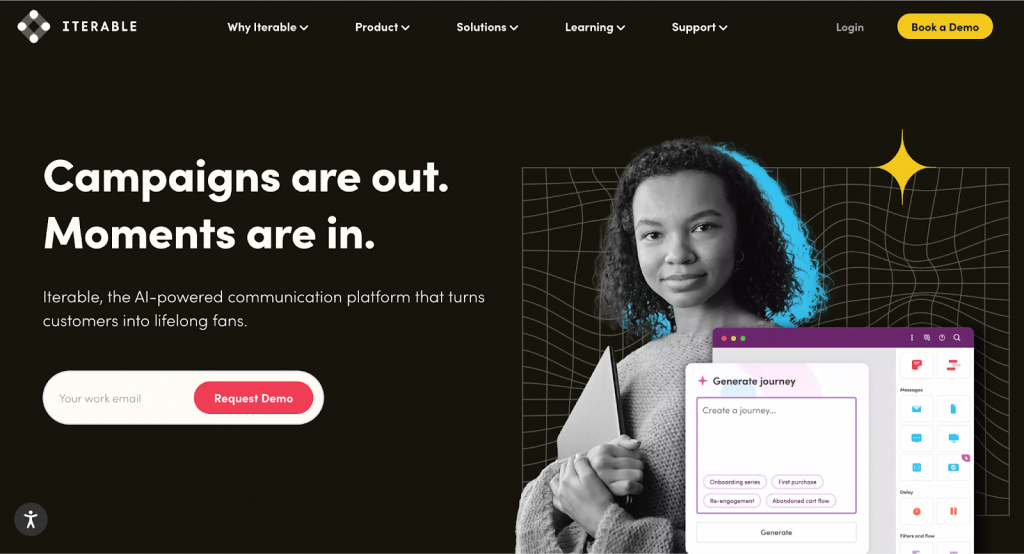
Iterable provides a strong balance between enterprise-grade features and ease of use, making it popular with mid-market and growing enterprises. It offers a visual workflow builder (Studio) that simplifies campaign orchestration while still supporting multi-channel marketing and AI-driven optimization.
- Scalability & limitations: Iterable supports scaling to millions of users with flexible data models and is suitable for teams wanting sophisticated segmentation without complexity overload. It may not match Braze’s extreme customization, but it hits a strong middle ground.
- Customer feedback: Users commend Iterable’s user-friendly interface and transparent AI explanations, but occasionally desire more advanced mobile-specific capabilities.
- Support quality: Iterable provides strong support with tiered service levels. It is praised for responsiveness and clear documentation focused on real enterprise use cases.
- Integration ecosystem: Iterable supports a broad integration ecosystem with many pre-built connectors for marketing tools like Shopify, Segment, and Zapier, plus enterprise-grade data warehouse connectivity.
- Enterprise fit: Iterable focuses on marketer-friendly sophistication with AI transparency and flexible segmentation that adapts to real-world workflows rather than theoretical models.
- Scale-specific recommendations: Best suited for mid-market to enterprise clients looking for powerful but approachable tools with intelligent automation.
- Total cost of ownership: Pricing starts around $500-$1,000 per month, with enterprise contracts typically around $30,000 annually; more transparent than Braze.
- Implementation roadmap: Implementation tends to be quicker and less resource-intensive than Braze, but still requires project planning.
5. HubSpot Marketing Hub
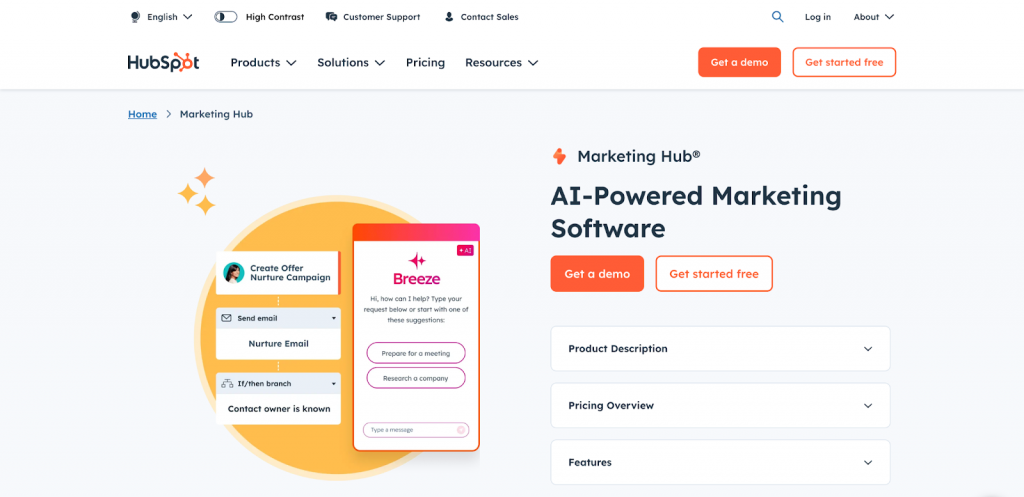
HubSpot targets a broad market from SMBs to mid-enterprise with an emphasis on integrated inbound marketing and CRM-driven segmentation. It delivers strong usability, multi-channel campaign support, and comprehensive marketing tools bundled in one platform.
- Scalability & limitations: HubSpot scales well for SMBs and mid-sized enterprises, but can face challenges at very large-scale enterprise levels or highly customized segmentation needs. It offers native subscriber management and built-in compliance.
- Customer feedback: HubSpot users value its ease of use, comprehensive reporting, and extensive templates, but cite limitations in complex customer journey engineering compared to Braze.
- Support quality: HubSpot offers strong support including extensive online resources, training, and dedicated customer success teams, ideal for teams seeking guidance throughout implementation.
- Integration ecosystem: HubSpot has a wide marketplace of integrations and native tools, with built-in CRM, web forms, landing pages, and subscriber management.
- Enterprise fit: Works best for companies seeking an all-in-one marketing platform with straightforward, segmented email and inbound campaigns rather than deep journey orchestration.
- Scale-specific recommendations: Well-suited for fast-growing companies and mid-market enterprises aiming to unify marketing and sales with moderate segmentation needs.
- Total cost of ownership: Pricing is transparent with tiered plans starting at several hundred dollars per month, scaling upwards with users and additional features.
- Implementation roadmap: Relatively fast implementation with abundant self-help resources; fewer technical barriers to entry.
6. Mailchimp
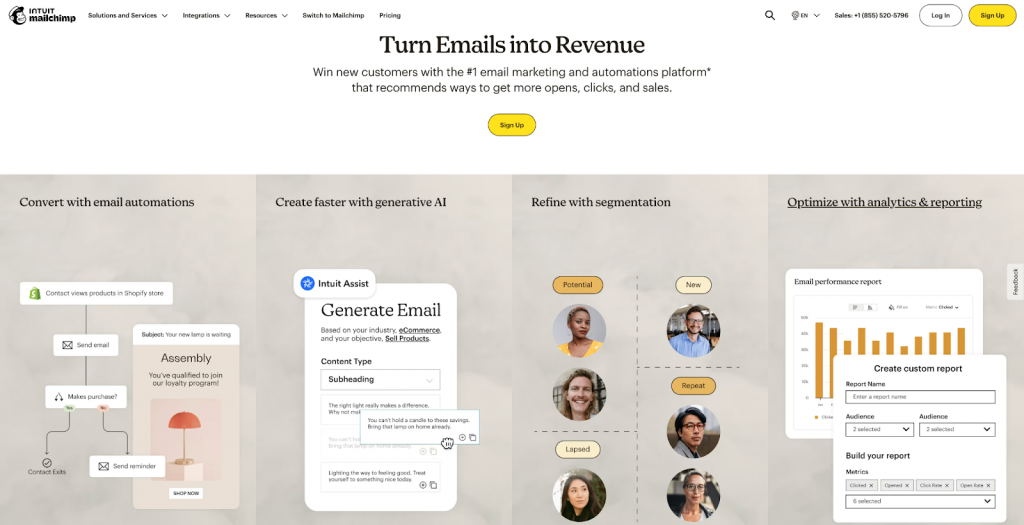
Mailchimp remains popular for its user-friendly interface and all-in-one marketing platform approach. It combines email marketing, website hosting, and simple CRM features, making it accessible to many businesses. For enterprises, Mailchimp offers solid segmentation features but with some limitations in handling highly complex or large-scale segmentation scenarios.
- Scalability & limitations: Mailchimp performs well with SMB to mid-market volumes but can struggle in large enterprises due to list management inefficiencies (charging per subscriber per list, leading to higher costs for overlapping contacts). Segmentation is straightforward but lacks the granularity and dynamic capabilities needed for very complex segmentation logic.
- Real customer feedback: Enterprises appreciate Mailchimp for ease of use and fast onboarding, but cite limitations in advanced automation and multi-list segmentation. Support quality is seen as adequate but sometimes slow with complex setups.
- Integration ecosystem: Mailchimp offers a broad range of integrations, including eCommerce platforms, CRMs, and social media tools, although some connectors are basic and less customizable.
- Handling enterprise complexity: Mailchimp is best for enterprises that require reliable, simpler segmentation rather than highly customized, multi-touchpoint campaigns that demand advanced logic.
- Cost of ownership: Costs can increase steeply with growing contact lists due to per-contact pricing across multiple lists, impacting total cost beyond straightforward platform fees.
- Implementation roadmap: Typical implementation takes 1-3 months, depending on integration depth, with minimal technical resources required.
7. Customer.io
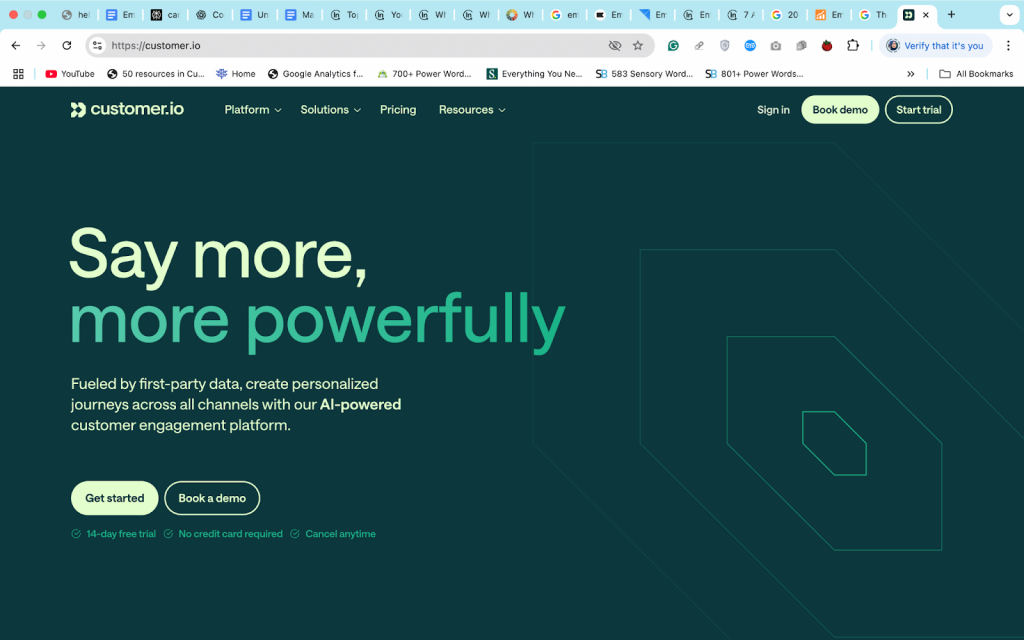
Customer.io targets technically sophisticated teams and enterprises needing advanced data-driven marketing automation. It excels in flexible, unlimited segmentation conditions, nested data, and omnichannel campaigns (email, SMS, push, in-app messaging).
- Scalability & limitations: Designed for high scalability and real-time data integration, Customer.io handles complex data sets well but requires technically capable teams for setup and maintenance.
- Real customer feedback: Enterprises praise Customer.io’s flexibility, particularly for lifecycle marketing and event-triggered campaigns. Feedback notes a steeper learning curve and reliance on technical expertise. Support is rated highly for responsiveness and depth, especially for complex use cases.
- Integration ecosystem: Has strong API support and connects well to diverse data sources and CRMs, allowing deep customization and real-time event-driven automation.
- Handling enterprise complexity: Unlike many SaaS tools, Customer.io is built to handle real-world enterprise data complexity, delivering scale-specific recommendations suited to large organizations.
- Cost of ownership: Pricing is transparent but can rise based on data event volumes and message volume. Ownership includes investments in advanced configuration and ongoing team collaboration.
- Implementation roadmap: Implementation typically requires 2-4 months with dedicated technical resources, including integration, custom workflows, and testing before going live.
8. ActiveCampaign
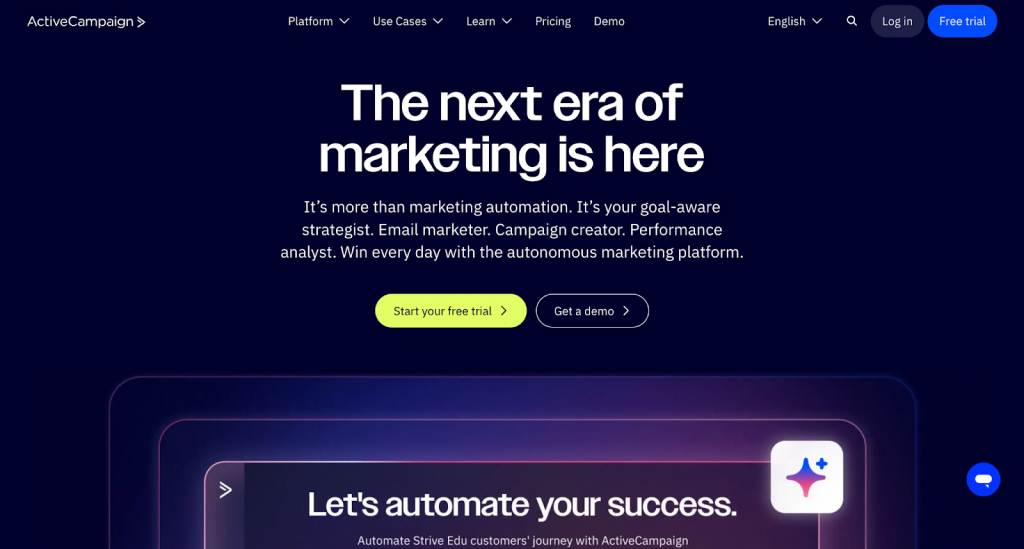
ActiveCampaign combines marketing automation with a built-in CRM and sales automation tools, positioning it well for SMBs and mid-sized enterprises looking for an AI-driven, streamlined platform with powerful automation capabilities.
- Scalability & Limitations: ActiveCampaign scales well to medium enterprise needs but has some upper limits on contact management and segment complexity compared to Customer.io. It excels in automation, visualization, and multi-brand management.
- Real Customer Feedback: Highly rated for ease of use, automation depth, and customer support quality. Some larger enterprises find customization options less exhaustive than Customer.io but better than Mailchimp.
- Integration Ecosystem: Robust integrations with CRMs, eCommerce, and dozens of other tools; built-in CRM enables seamless sales and marketing handoff.
- Handling Enterprise Complexity: Supports connected customer journeys and multi-step automations with predictive sending and AI-powered recommendations, helping enterprises move beyond one-size-fits-all segmentation.
- Cost of Ownership: Pricing grows with contacts and feature tiers, but includes comprehensive tools that might offset the need for additional marketing platforms.
- Implementation Roadmap: Typically 1-3 months, lighter technical requirements than Customer.io, suitable for teams needing quick deployment with scalable automation workflows.
9. Omnisend
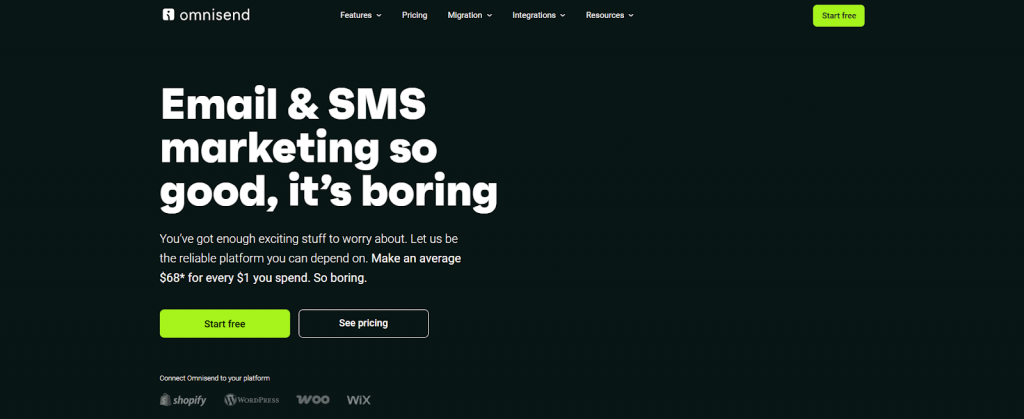
Omnisend is an advanced email segmentation platform built primarily for eCommerce businesses. It emphasizes dynamic, real-time segmentation based on customer behavior, transactional history, lifecycle stages, and engagement levels. Its segmentation capabilities enable highly personalized marketing campaigns that increase conversion rates and customer retention.
- Scalability & limitations: Scales well with large eCommerce contact lists; segments update automatically with user actions. Some lag may occur with very large lists during complex workflow automations.
- Real customer feedback: Praised for eCommerce-specific segmentation power and ease of use despite complexity. Users value the lifecycle-based segments that boost retention and conversion.
- Support quality: 24/7 award-winning support. Dedicated Customer Success Managers are available starting at enterprise pricing levels.
- Integration ecosystem: Deep and reliable integrations, especially with eCommerce systems like Shopify and BigCommerce.
- Enterprise complexity handling: Handles real-world complexities such as multi-step retention campaigns and dynamic customer tiers. Provides scale-specific segmentation advice and detailed implementation roadmaps.
- Total cost of ownership: Higher pricing reflecting its enterprise eCommerce feature set. Enterprise plans start around $400/month, inclusive of dedicated support and advanced features.
- Implementation roadmap: Clear onboarding timelines and resource guidelines. Customer Success Managers facilitate smooth enterprise adoption.
10. Brevo (formerly Sendinblue)
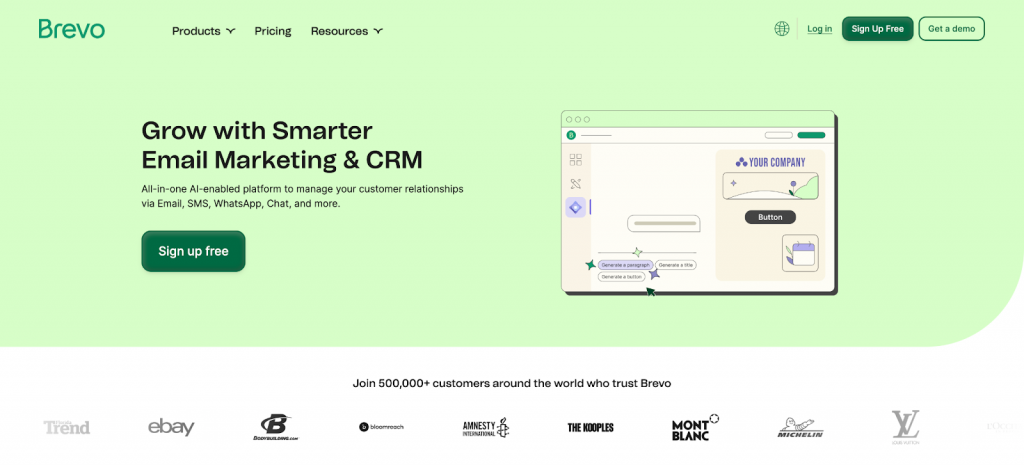
Brevo is a versatile email marketing platform offering email segmentation as part of a multi-channel marketing solution. It balances affordability and functionality with support for email, SMS, and WhatsApp messaging, targeting small to medium-sized businesses but also serving growing enterprises.
- Scalability & limitations: Handles medium-sized lists efficiently but may slow with very large or highly complex automations. Still evolving backend performance for large-scale enterprise use.
- Real customer feedback: Valued for affordability and multi-channel flexibility. Some users find automation logic less flexible for enterprise-grade workflows.
- Support quality: Email and in-app support on standard plans. Dedicated enterprise support on higher tiers, generally less proactive for complex needs.
- Integration ecosystem: Approximately 58 integrations, covering main platforms but fewer advanced API functions.
- Enterprise complexity handling: Good for straightforward segmentation and automation. Requires custom workarounds for complex flows and multi-conditional logic.
- Total cost of ownership: Lower entry pricing. Additional costs are possible for add-ons, SMS, higher email volume, or premium support.
- Implementation roadmap: Basic onboarding support available. Less detailed enterprise implementation timelines may require additional internal or external resources.
How Insider makes segmentation even more precise
Now that you’ve realized just how important segmentation is, it’s time to invest in a segmentation tool so you can carry out the following steps as quickly and accurately as possible.
With Insider, you can take segmentation to the next level and craft personalized experiences that speak directly to your customers’ needs and behaviors. Let’s look at what you can achieve with Insider:
- With Insider’s powerful predictive engine, you can create segments based on real-time data, such as discount affinity, likelihood of purchase, and lifecycle stage.
- Insider’s AI engine allows you to make predictions based on real-time events like purchase intent or churn, enabling you to seize micro-moments. So you don’t miss out on opportunities to delight and engage users when they’re most likely to take action.
- Whether it’s demographics, behaviors, or even custom attributes, you can segment users based on any criteria. Add rules to enhance your segments, boosting engagement and making your marketing efforts more targeted and effective.
- Personalization starts with data, and Insider gives you the ability to refine segments with custom datasets—whether that’s cookie values, POS data, or any other unique data source. The flexibility to work with any kind of data ensures you can build highly targeted segments.
- Get precise with your targeting. Insider’s platform lets you trigger actions based on user interactions, like clicks, purchases, or even engagement levels. This allows you to trigger behavior with military-like precision and convert leads into loyal customers.
Ready to get started with segmentation? Insider offers over 120+ attributes so you can build the most effective segments for your business goals. Get started today with a quick demo.